
Kirstenbosch Garden
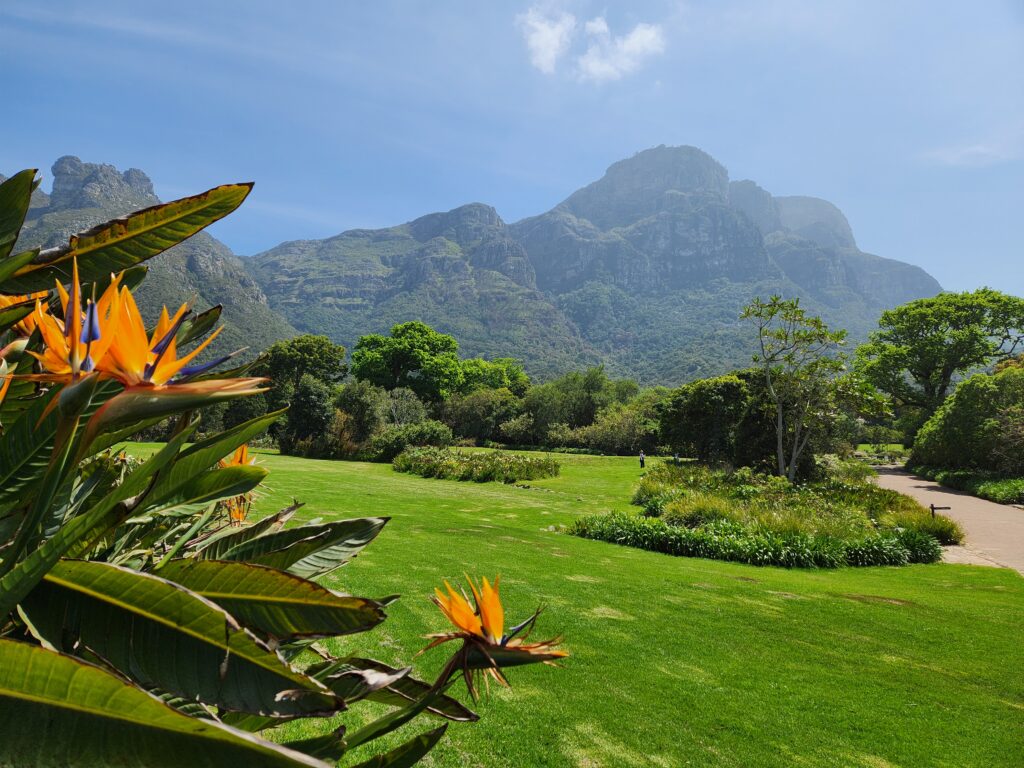
Kirstenbosch is one of the most beautiful and celebrated botanical gardens in the world. Located at the foot of the eastern slopes of Table Mountain, about fifteen minutes from the Cape Town city centre, it is an absolutely unmissable destination during any visit to South Africa.
An exceptional garden Founded in 1913, Kirstenbosch was the first botanical garden in the world created to protect and cultivate exclusively the indigenous flora of a country. It spans approximately 36 hectares of landscaped gardens, integrated within a 528-hectare nature reserve on the slopes of Table Mountain. The entire estate forms part of the Cape Floristic Region, inscribed as a UNESCO World Heritage Site — one of the six floral kingdoms of the planet and the richest in plant biodiversity relative to its surface area.
The fynbos The star of Kirstenbosch is the fynbos — a plant biome unique in the world, endemic to the Cape, encompassing thousands of plant species including the famous proteas (South Africa’s national flower), ericas and restios. The diversity and beauty of this vegetation is breathtaking for anyone encountering it for the first time. Entire fields of flowering proteas, bushes of vibrantly coloured ericas, extraordinary succulent plants — Kirstenbosch is the finest place in the world to discover this singular ecosystem.
The Boomslang Canopy Walk The garden’s flagship attraction since its opening in 2014 is the Boomslang — named after the tree-dwelling snake in Afrikaans. This serpent-shaped suspended walkway rises through the tree canopy and offers spectacular panoramic views over the gardens, the mountain and Table Bay beyond. It is an experience that is both architecturally remarkable and sensorially unforgettable.
Biodiversity The garden is home to more than 7,000 plant species, a large proportion of which are endemic to the Cape region. It includes a section dedicated to the traditional medicinal plants used by the San and Khoikhoi peoples, a rose garden, a dense indigenous forest with centuries-old trees, water garden sections and even a greenhouse for the most delicate species.
Wildlife Despite its cultivated character, Kirstenbosch is also a refuge for numerous animals. Dassies (rock hyraxes, small mammals resembling marmots) bask on the rocks with complete calm. Dozens of bird species are regularly observed, including the iconic Cape sugarbird which feeds on the nectar of proteas. At night, honey badgers and porcupines sometimes venture into the garden.
The setting and atmosphere What makes Kirstenbosch truly unique is the way the landscaped garden imperceptibly merges into the wild mountain behind it. You can move from a manicured lawn to a mountain trail within minutes, with increasingly magnificent views over the Cape Peninsula as you climb. The atmosphere is peaceful, lush and almost melancholic in misty weather — the garden has a soul that few places in the world can match.
Practical information Kirstenbosch is open every day of the year, from 8am to 6pm in summer and until 5pm in winter. There is an excellent on-site restaurant, Moyo, as well as a more casual café. The garden shop offers seeds, plants and fynbos-based products of excellent quality.