
Jeffrey’s bay
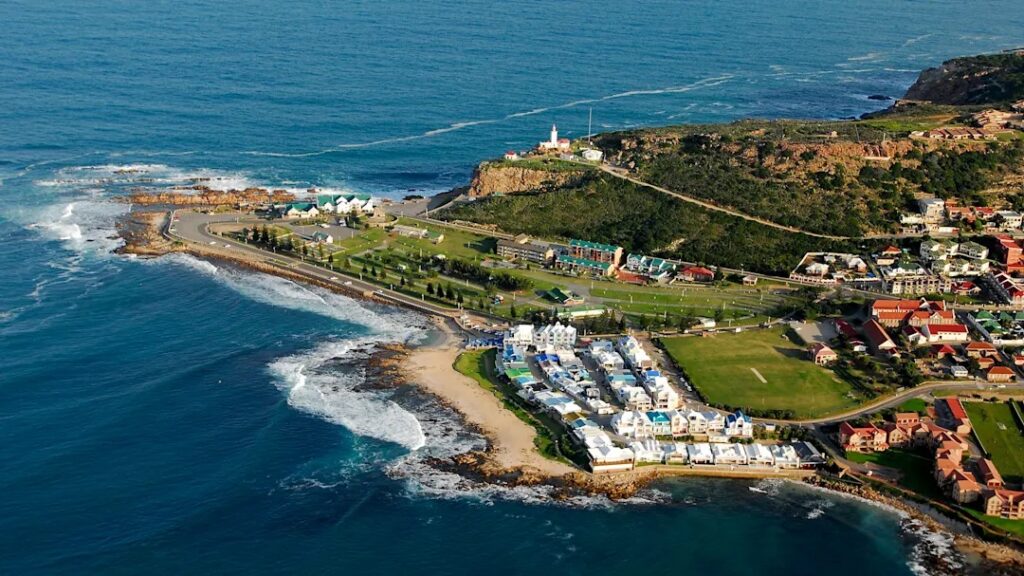
Jeffreys Bay — universally known as “J-Bay” — is one of the most legendary surf destinations on the planet. While it sits technically just east of the traditional Garden Route, on the edge of the Eastern Cape province, it is almost always included in Garden Route itineraries, such is its powerful allure.
The most perfect wave in the world J-Bay owes its worldwide reputation to one thing: its wave. Supertubes, the main break at Jeffreys Bay, is regarded by many as producing the longest and most perfect right-hand wave in the world. In the right conditions, a surfer can ride a wave that peels for several hundred metres with an almost mechanical consistency, offering long, fast and hollow sections that are every surfer’s dream. The wave breaks over a sand and rock bottom with a regularity and power that has made this spot legendary since the 1960s.
The World Surf League Championship Every July, J-Bay hosts a stop on the WSL Championship Tour — the professional world surf circuit. The Corona Open J-Bay attracts the best surfers on the planet and thousands of spectators, transforming the town for around ten days into a surf festival atmosphere. Legends such as Kelly Slater, Mick Fanning and John John Florence have written memorable chapters of surf history here. The 2015 incident in which Mick Fanning was attacked by a great white shark live during a final remains one of the most spectacular and talked-about moments in the sport’s history.
Surf culture Beyond the wave itself, J-Bay is steeped in a deep and authentic surf culture. The town grew up around surfing in the 1960s when the first pioneers discovered the wave and settled here in spartan conditions. Since then, everything has revolved around that culture: artisan board shapers, surf shops, cafés where you watch the breaks from the terrace, and surfers who live here year-round to surf every day. The vibe is relaxed, sun-soaked and slightly hippie — the feel of a genuine surf town before mass tourism takes over.
The breaks Supertubes is the flagship spot, but J-Bay actually offers a series of breaks strung along the coastline, each working at different swell sizes. Boneyards, Impossibles, Point, Kitchen Windows and Albatross each have their own characteristics, allowing surfers of all levels to find their wave depending on the conditions of the day.
Beyond surfing J-Bay is not exclusively for surfers. The town has lovely swimming beaches, a pleasant seafront promenade and a lively town centre with good restaurants, craft markets and surf shops. The Shell Museum is a local curiosity — the area is renowned for the richness and variety of shells that wash up on its beaches, and Jeffreys Bay was originally known as a shell-collecting destination long before surfers discovered it.
Kabeljous and Seekoei Nature Reserve On the outskirts of town, two protected natural estuaries — Kabeljous and Seekoei — offer escapes into nature with excellent birdwatching and kayaking opportunities on calm, unspoiled waters. A peaceful counterpoint to the electric energy of the surf breaks.
The climate and the sea A word of warning: the waters at J-Bay are cold, influenced by the Benguela Current which carries frigid Antarctic waters up along the Atlantic coast. Even in summer, a wetsuit is virtually essential. The wind can also be strong and unpredictable. But it is precisely this oceanic energy that creates the conditions for such powerful and consistent waves.