Muizenberg Beach
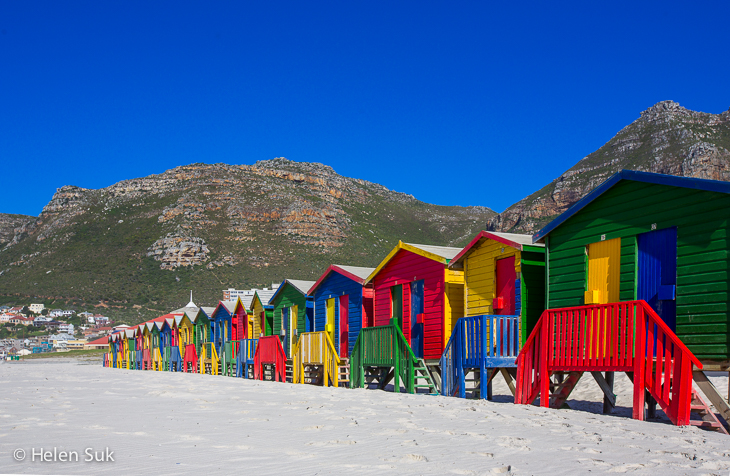
Muizenberg is one of Cape Town’s most iconic and beloved beaches, known the world over for its colourful beach huts — one of the most reproduced images in all of South Africa.
The beach huts The iconic image of Muizenberg is its rows of beach huts — small wooden cabins painted in vivid, contrasting colours lined up directly on the sand. Red and white, yellow and blue, green and orange — each cabin is different, and together they form an absolutely delightful graphic composition, especially when photographed from above with the beach and ocean as a backdrop. These Victorian cabins date from the late 19th century and are listed as historical monuments. They encapsulate the relaxed seaside spirit of the Cape Peninsula.
A beginner surfer’s paradise Muizenberg is the go-to surf beach for beginners in South Africa, and one of the best in the world for learning. The reason is simple: its waves are long, consistent, not too powerful and form far from the shore, giving plenty of time to stand up on the board. Dozens of surf schools operate on the beach, and on weekends hundreds of beginners of all ages can be seen trying to find their feet under the supervision of patient instructors. The atmosphere is joyful, relaxed and welcoming — very different from more serious surf spots like Jeffreys Bay.
The warmer waters of False Bay Muizenberg sits on the False Bay coastline, facing east, which means its waters are influenced by the warm Indian Ocean current rather than the cold Benguela Current that sweeps the Atlantic coast. In practice, the water here is significantly warmer than at Clifton or Camps Bay — sometimes by as much as 5 to 8 degrees. For families with children and swimmers who would rather not freeze, Muizenberg is Cape Town’s beach of choice.
The history Muizenberg is one of the oldest seaside resorts in South Africa, enjoying its golden age in the late 19th and early 20th centuries, when it was the favourite summer destination of the British colonial elite and wealthy Cape families. Cecil Rhodes, the mining magnate and colonial politician, owned a house here — Rust en Vreugde — where he died in 1902, and which is now preserved as a museum. The town also holds military historical significance: it was the site of the Battle of Muizenberg in 1795, in which the British seized control of the Cape Colony from the Batavians.
The surf and cultural scene Over the decades, Muizenberg has developed a distinctly bohemian surf culture. The neighbourhood around the beach, particularly York Road, is dotted with trendy cafés, relaxed restaurants, vintage surf shops and independent art galleries. It is a favourite haunt of young Capetonians, artists and surfers who appreciate its less polished atmosphere compared to more upmarket areas like Camps Bay. The Empire Café and the Muizenberg Beach Café are local institutions where people come as much to watch the surfers as to enjoy a good coffee.
Marine wildlife Muizenberg and False Bay are known to be frequented by great white sharks, drawn by the seal colony on nearby Seal Island. Monitoring and alert systems are in place on the beach, with colour-coded flags indicating the level of risk. Attacks remain rare but the presence of sharks is very real — something that does not prevent local surfers from heading out daily with remarkable composure.
The peninsula Muizenberg is an excellent base for exploring the Cape Peninsula southward — Kalk Bay with its picturesque fishing harbour and antique dealers, Simon’s Town and Boulders Beach, and then Cape Point. To the north, the road follows False Bay toward Somerset West and the Stellenbosch wine estates. It is an ideally positioned base from which to explore in every direction.
Kalk Bay — the unmissable neighbour Just two kilometres from Muizenberg lies Kalk Bay, one of the most charming coastal villages on the Cape. Its small artisan fishing harbour, seafood restaurants on the quayside, antique and bric-a-brac shops, and bohemian village atmosphere make it an essential stop on the same day as Muizenberg.